


Fintech Cybersecurity Recruitment and the Strategic Search for Resilience in 2026
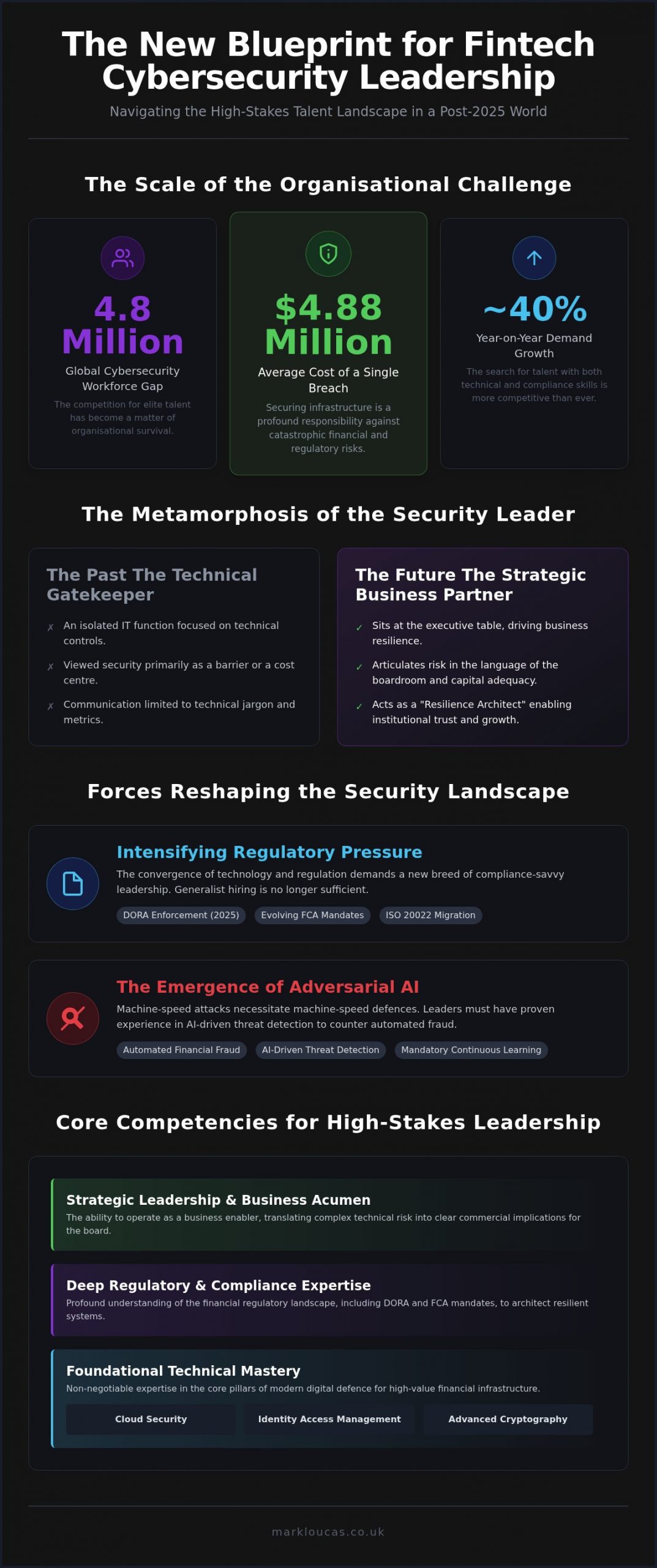
With a global cybersecurity workforce gap now reaching 4.8 million professionals, the competition for elite talent has shifted from a standard hiring exercise into a high-stakes pursuit of organisational survival. You likely recognise the immense difficulty in finding individuals who possess both the technical prowess to thwart AI-driven attacks and the nuanced understanding of FCA or DORA compliance. This scarcity represents a significant business risk, especially as the demand for fintech cybersecurity recruitment grew by approximately 40 per cent year on year leading into 2026. It’s a rare combination of skills that often feels like searching for a needle amongst the haystacks of the City.
We understand that a single breach can cost an average of $4.88 million, which means securing your infrastructure is a matter of profound responsibility. This guide reveals how to refine your strategy to secure the strategic architects your firm requires to remain resilient against catastrophic breaches and regulatory fines. We shall explore the rise of hybrid expertise, the impact of the 2025 DORA enforcement, and the bespoke methods required to attract leaders who value discretion as much as they do technical excellence. This ensures your interests are managed with the expert care they deserve, maintaining a steady and reassuring pulse in an increasingly volatile digital environment.
Key Takeaways
- Understand the evolution of the CISO from a technical specialist to a vital strategic partner capable of navigating the complex 2026 regulatory environment.
- Identify the critical technical competencies, including cloud security and identity access management, that are indispensable for protecting modern financial infrastructure.
- Learn how a bespoke approach to fintech cybersecurity recruitment allows firms to access elite talent through private networks and sophisticated market mapping.
- Discover the essential components of a competitive hiring framework designed to reduce turnover and secure the long term commitment of elite security leaders.
- Recognise the importance of aligning your security leadership with international standards to ensure full compliance and operational resilience against catastrophic risks.
Please consider using our contact page as a starting point for your search for elite security leadership.
The Changing Landscape of Fintech Cybersecurity Recruitment
The role of the Chief Information Security Officer has undergone a quiet but profound metamorphosis. By 2026, the era of the technical gatekeeper has faded, replaced by a strategic business partner who sits firmly at the executive table. This shift is driven by the reality that security is no longer an isolated IT function but the very bedrock of institutional trust. Successful fintech cybersecurity recruitment now requires identifying leaders who can articulate risk in the language of the boardroom whilst maintaining an unshakeable grip on the technical horizon. They must be as comfortable discussing capital adequacy as they are with zero trust architectures.
The enforcement of the Digital Operational Resilience Act (DORA) in early 2025, alongside evolving FCA mandates, has fundamentally altered hiring priorities. Organisations are no longer merely seeking security experts but are instead pursuing resilience architects. These professionals must possess a deep understanding of financial technology and the complex web of regulations that govern it. Generalist tech hiring often falls short here, as it fails to account for the specific pressures of high stakes financial infrastructure where a single second of downtime can lead to significant regulatory scrutiny and heavy fines. This move away from generalist tech hiring toward niche fintech expertise is now a prerequisite for stability.
Regulatory Pressures and the Search for Compliance Experts
The requirement for leaders who can interpret FCA and PRA mandates alongside technical security is now absolute. As firms navigate the final stages of the ISO 20022 migration, the demand for specialists who understand the security implications of rich data messaging has surged. This convergence of payments and security demands a rare breed of professional who can manage operational resilience with meticulous detail. To ensure you are identifying the right calibre of talent for these overlapping responsibilities, it is helpful to review the best interview questions for compliance candidates. This ensures that your chosen lead possesses the necessary blend of regulatory foresight and technical acumen.
The Emergence of Adversarial AI as a Recruitment Driver
In 2026, the threat landscape is dominated by adversarial AI. Fintechs are prioritising candidates with proven experience in AI driven threat detection to counter increasingly sophisticated, automated financial fraud. Machine speed attacks require machine speed defences. The scarcity of talent capable of defending against these automated attacks has made the search for elite professionals more competitive than ever, fundamentally changing the nature of fintech cybersecurity recruitment. Continuous learning is no longer an advantage; it is a mandatory trait for those tasked with protecting high value assets. Security leaders must now demonstrate an ability to adapt their defensive strategies at the same pace as the evolving threats they face.
We invite you to contact Mark Loucas Ltd for personalised advice on the leadership competencies required to safeguard your institution.
Essential Competencies for High Stakes Security Leadership
Securing the future of a financial institution requires more than just a passing familiarity with code. It demands a rare synthesis of technical mastery and executive presence. In the current climate of fintech cybersecurity recruitment, we observe that the most successful candidates are those who view security as an enabler of business rather than a barrier to it. They possess the quiet confidence to manage high-value assets whilst navigating the intricate requirements of the modern regulatory environment.
Critical technical skills such as advanced cryptography, identity access management, and cloud security are the non-negotiable foundations of any resilient team. However, the federal fintech skills gap highlighted in recent years underscores a broader deficiency in the global market. Finding a leader who understands the intricate plumbing of RTGS systems and global payments infrastructure is increasingly difficult. These individuals must be able to protect the integrity of financial transactions with meticulous attention to detail, ensuring that every layer of the infrastructure is hardened against intrusion.
Equally vital are the soft skills that allow a leader to thrive amongst a sophisticated board. Stakeholder management is not merely a corporate buzzword; it’s the ability to translate a zero-day vulnerability into a quantified financial risk that a CFO can act upon. This level of communication ensures that security remains a top-tier priority throughout the organisation’s growth phase. In high-growth environments, cultural fit is as important as technical prowess. A leader must be agile enough to support rapid scaling whilst maintaining the disciplined focus required for regulatory compliance. This balance prevents the friction that often occurs between innovation and safety.
Technical Mastery in Payments and Banking Technology
A deep expertise in fintech banking technology is essential for ensuring secure product development from the very first line of code. Effective fintech cybersecurity recruitment prioritises those who can integrate DevSecOps to maintain a secure and agile development pipeline. Endpoint security also remains a critical focus, particularly as remote banking models redefine the traditional perimeter. These technical foundations ensure that the digital architecture remains both flexible and impenetrable.
Strategic Leadership and Crisis Management
True leadership is most visible during a major security incident. The ability to lead a team through a crisis without compromising business operations is a hallmark of an elite professional. These individuals develop long-term security roadmaps that anticipate threats before they manifest. They translate complex technical risks into financial impact, providing the board with a clear vision of the institution’s resilience. If you require assistance in identifying such distinguished talent, you may wish to discuss your requirements with our consultants.
We suggest that firms reach out to our consultants to learn more about our discreet executive search process and how it can secure your firm’s resilience.
The Strategic Value of Executive Search for Cybersecurity Roles
The search for elite security leadership is a delicate endeavour that requires a level of precision often missing from volume-driven recruitment models. Whilst generalist agencies focus on the quantity of applicants, a boutique approach prioritises the quality of the fit. This is particularly vital in fintech cybersecurity recruitment, where the stakes are exceptionally high and the pool of qualified individuals is remarkably shallow. A specialist advisor acts as a brand ambassador, representing your institution with the same level of sophistication and discretion that you would expect from a private concierge.
Discretion is the cornerstone of our methodology. When headhunting senior professionals, the process must remain entirely confidential to protect both the firm’s reputation and the candidate’s current position. Through market mapping and intelligence, we uncover the passive talent that competitors often overlook. These are the individuals who are not actively monitoring job boards but are open to the right strategic opportunity when presented by a trusted insider. Market mapping involves a granular analysis of the talent landscape within specific prestigious districts and global centres, allowing us to identify the quiet leaders who are driving innovation behind the scenes.
Accessing Private Networks and Passive Talent
The most accomplished cybersecurity talent is rarely found on public platforms. These individuals are often deeply embedded in critical projects and must be approached directly through established, private channels. Our specialised financial recruitment services leverage private networks built over years of focused engagement with top-tier CISOs and security architects. We employ a meticulous process of identifying and vetting candidates long before the first interview occurs. This vetting includes a comprehensive review of past performance in regulated environments and an assessment of their ability to scale security operations alongside rapid business growth.
Reducing the Risk of a Bad Hire in High Stakes Roles
A failed leadership appointment in a security role is more than a simple inconvenience; it is a significant financial and reputational liability. The cost of a bad hire at this level can be catastrophic for a high-growth firm. To mitigate this risk, we utilise deep referencing and rigorous technical assessments tailored to the specific needs of the banking sector. Understanding the local nuances of global fintech hubs like London is essential, as the regulatory and cultural landscape varies significantly between jurisdictions. This unhurried, diligent approach to fintech cybersecurity recruitment ensures that your interests are managed with expert care, providing a stable foundation for your future growth.
If you would like to discuss your hiring framework with an expert advisor, we are here to provide tailored guidance that aligns with your institutional goals.
Developing a Competitive Hiring Framework for Security Professionals
In the competitive arena of fintech cybersecurity recruitment, a standard job offer is rarely enough to secure the most distinguished talent. You must develop a value proposition that resonates with the aspirations of elite professionals who are often already well-compensated and highly valued. This involves more than just a competitive salary. It requires a commitment to unhurried, respectful interview processes that value the candidate’s time and expertise. A streamlined experience signals that your firm is organised and respects professional boundaries, which is a significant differentiator in a market known for high-pressure tactics.
Compensation packages should be structured to include long term incentives, comprehensive health benefits, and flexible working arrangements that reflect the modern reality of security operations. Elite candidates often prioritise the quality of the mission and the opportunity to work with cutting-edge technology. Providing a clear roadmap for ongoing professional development is essential for retaining top talent who wish to remain at the forefront of their field. When a professional feels their growth is nurtured, they are far more likely to offer the long-term commitment required for true operational resilience.
Crafting a Compelling Employer Brand for Security Experts
To attract the finest minds, you must position your firm as a centre of innovation and security excellence. This requires a level of transparency regarding your current security posture and the challenges your team faces. Candidates value honesty and are often more attracted to a firm that acknowledges its hurdles whilst providing the resources to overcome them. Utilising specialised financial recruitment partners allows you to refine your market positioning and ensure your brand story is delivered with the necessary sophistication to reach passive, high-calibre talent.
Modern Assessment Techniques for Technical and Cultural Fit
Traditional interviews often fail to capture the depth of a candidate’s problem-solving abilities. We suggest moving beyond standard questioning to include scenario-based assessments and peer reviews that simulate real-world security incidents. Using the best interview questions can help gauge a candidate’s regulatory knowledge and technical acumen simultaneously. A collaborative approach between HR and technical leadership ensures that every new hire is not only a technical expert but also a seamless cultural fit. To ensure your framework is robust enough to attract the industry’s most sought-after leaders, get in touch with our team today.
We encourage you to get in touch with our team to start your next search for distinguished security leadership.
Why Mark Loucas Ltd is the Preferred Partner for Fintech Security
Mark Loucas Ltd has maintained an exclusive focus on permanent fintech and digital banking recruitment since our founding in 2011. This deliberate specialisation allows us to offer a level of insight that generalist firms simply cannot replicate. Our approach to fintech cybersecurity recruitment is unhurried and meticulous, mirroring the attentive service of a high end concierge. We understand that our clients require more than just a list of candidates. They need a partner who values privacy and understands the gravity of protecting high stakes financial infrastructure.
Our global reach extends into the most prestigious districts of major financial centres, including London, Dubai, and Singapore. This geographical breadth, combined with our sophisticated market mapping and talent advisory services, ensures we can source elite talent regardless of where they are currently situated. By providing a steady, reassuring pulse throughout the search process, we act as a discreet extension of your own executive team. We support your long term growth with tailored solutions that reflect the patience and diligence required in high value transactions.
A Boutique Approach to Global Talent Challenges
We deliberately shun the impersonal, volume driven nature of large corporate entities in favour of an intimate service model. Every client and candidate receives our undivided attention, ensuring that every placement is a harmonious match of both technical skill and cultural values. Since 2011, we’ve built a reputation for excellence by treating every search as a bespoke project. This commitment to tailored excellence ensures that the unique challenges of your specific sub sector are met with expert care and refined service. It’s an approach that suggests the client is the sole focus of our attention.
Delivering Strategic Resource Management and Executive Search
Solving complex resource challenges in the security domain requires a deep knowledge of the payments industry. We specialise in identifying high calibre professionals for senior level placements, ensuring that your leadership team is equipped to navigate the strategic search for resilience. Our expertise in payments industry recruitment allows us to find individuals who understand the nuances of RTGS systems and the evolving regulatory landscape. By focusing on the granular details of your requirements, we provide the strategic advisory necessary to build a secure and stable future for your institution.
Please contact our specialist advisors to begin your search for the elite security talent your institution requires.
Securing Your Institutional Resilience for the Years Ahead
The digital landscape of 2026 demands a fundamental shift in how we approach fintech cybersecurity recruitment. It’s no longer sufficient to hire for technical ability alone; you must seek leaders who embody strategic resilience and possess the regulatory foresight to navigate an increasingly complex environment. Security is now strategy. By prioritising niche expertise and leveraging discreet executive search networks, your firm can transform security from a defensive necessity into a core competitive advantage. This transition ensures your high stakes infrastructure remains impenetrable whilst supporting rapid innovation.
Since 2011, Mark Loucas Ltd has provided a specialist fintech focus that ensures your interests are managed with expert care. Our elite network and comprehensive market mapping services are designed to uncover the quiet, high calibre leaders who safeguard the world’s most prestigious financial districts. Secure your fintech future by partnering with the experts at Mark Loucas Ltd for your next cybersecurity hire. We look forward to providing the tailored solutions and individualised attention required to protect your institution’s most valuable assets.
Frequently Asked Questions
What are the most in demand cybersecurity roles in fintech for 2026?
Cloud security architects, application security engineers, and incident response leaders are the most sought-after professionals in 2026. These roles are critical as firms move away from traditional perimeters towards resilient, cloud-native infrastructures. The focus is specifically on those who can perform threat modelling in regulated financial environments. This demand is driven by the need to protect high-stakes digital banking assets from increasingly sophisticated automated attacks.
How does DORA impact the recruitment of security professionals in the UK?
The enforcement of the Digital Operational Resilience Act (DORA) in early 2025 has turned compliance into a core technical requirement. UK firms with European subsidiaries must now prioritise hiring professionals who understand governance, risk, and compliance alongside technical security. This has shifted the focus of fintech cybersecurity recruitment towards resilience architects. These individuals are tasked with ensuring business continuity and maintaining operations even during significant security incidents or systemic failures.
Why should a fintech firm use an executive search agency for a CISO role?
A CISO is a strategic business partner, and finding such a leader requires the discretion and private networks that only an executive search firm can provide. Top-tier candidates are rarely active on public job boards and must be approached with the unhurried precision of a boutique advisor. This ensures the firm’s reputation remains protected whilst accessing passive talent. It also reduces the catastrophic financial and reputational risk associated with a failed leadership appointment.
What technical skills are essential for a fintech security architect today?
What technical skills are essential for a fintech security architect today?
How can fintech startups compete with large banks for top security talent?
Fintech startups can compete by offering a compelling employer brand that emphasises innovation, agility, and a clear sense of mission. Whilst large banks may offer higher base salaries, elite professionals are often attracted to environments where they can have a direct impact on security posture. Startups can also provide flexible working arrangements and long-term incentives that traditional institutions struggle to match. Transparency regarding security challenges can actually act as a powerful draw for distinguished talent.
What is the typical lead time for an executive search in the cybersecurity sector?
A meticulous executive search typically requires a period of several months to identify and vet the highest calibre of talent. This timeframe allows for a comprehensive market mapping exercise and deep referencing to ensure a perfect cultural and technical fit. Rushing this process increases the risk of a bad hire, which can be far more costly in the long term. Patience is a prerequisite for securing professionals who value privacy and tailored solutions above all else.
How does Mark Loucas Ltd ensure the quality of its security candidates?
We ensure quality through a rigorous vetting process that includes technical assessments and an analysis of past performance in regulated financial sectors. Our deep expertise in fintech cybersecurity recruitment allows us to identify the quiet leaders who are driving innovation behind the scenes. We act as a discreet brand ambassador for our clients, ensuring that every candidate is treated with expert care. This unhurried approach guarantees that only the most distinguished professionals reach the final interview stage.
What role does AI play in modern fintech cybersecurity recruitment?
AI acts as both a tool for identifying potential talent and a driver for new role requirements within the security team. We use market intelligence to track AI-exposed roles, which are experiencing double the job growth of traditional positions. However, the human element remains paramount in executive search. Whilst AI can assist with market mapping, the unhurried process of building relationships and assessing cultural fit requires the nuanced touch of a highly connected boutique advisor.

Article by
Liam Henfrey
Liam Henfrey is a seasoned specialist in the payments and banking sectors with over two decades of experience. As the Founder and CEO of FINOPSIS and Managing Director at Mark Loucas Ltd, he advises organisations on complex financial operations and technology. His career includes senior roles at PwC, Deloitte, and Visa Europe.
Related Fintech Recruitment Guides
If you liked this guide then you may also like the following: