


Mastering the Strategic Art of Managing Up for Fintech Leaders in 2026
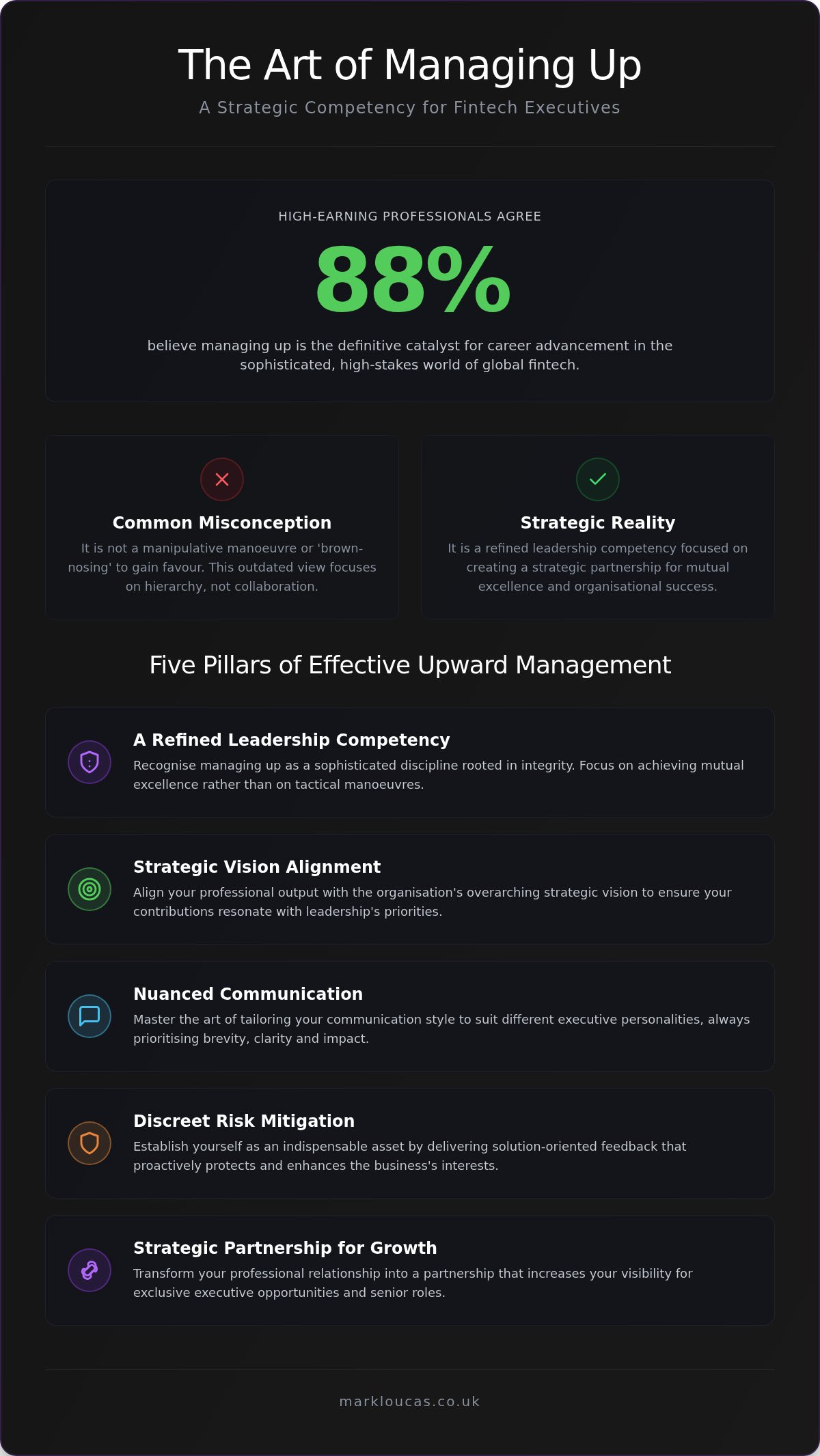
Did you know that 88% of high-earning professionals believe managing up is the definitive catalyst for career advancement? In the sophisticated, high-stakes world of global fintech, this skill has evolved beyond mere office politics. It is now a refined leadership competency that separates the industry’s most discerning executives from their peers. This capability is particularly vital as manager engagement continues to fluctuate, creating a unique opening for those who can provide steady, strategic support to their superiors.
You likely recognise the quiet frustration of delivering meticulous work whilst feeling your efforts are misaligned with the shifting priorities of senior leadership. It is a common challenge amongst leaders in the payments sector to feel their individual contributions are obscured by communication barriers or the intense pace of the market. Many professionals find themselves feeling undervalued despite their expertise, especially when their personal output doesn’t seem to resonate with the broader objectives of the board.
By mastering these nuanced interactions, you will transform your relationship with leadership into a strategic partnership that secures greater autonomy and resources for your key projects. This guide explores the art of aligning your professional output with the strategic vision of your organisation. We provide a clear path toward the most exclusive executive search opportunities and senior roles available in 2026.
Key Takeaways
- Recognise that managing up is a refined leadership competency focused on mutual excellence rather than a tactical or manipulative manoeuvre.
- Align your professional output with the overarching strategic vision of the organisation to ensure your contributions resonate with the priorities of senior leadership.
- Master the nuanced art of tailoring your communication style to suit different executive personalities whilst prioritising brevity and impact.
- Establish yourself as a discreet risk mitigator by delivering solution oriented feedback that protects and enhances the interests of the business.
- Transform your professional relationship into a strategic partnership that increases your visibility for exclusive executive search opportunities and senior roles.
If you are looking to elevate your executive profile or require bespoke talent advisory, please feel free to get in touch with our specialist team.
Defining the Strategic Concept of Managing Up
In the context of elite professional development, Defining the Strategic Concept of Managing Up involves the conscious process of working with a supervisor to achieve the best possible results for the organisation. It’s a sophisticated discipline that moves beyond the outdated hierarchies of the past. Instead, it focuses on a curated partnership where both parties are aligned on a singular vision of excellence. This approach ensures that your expertise is directed toward the most impactful goals of the business.
There’s a persistent myth that managing up is a manipulative behaviour whilst involving brown nosing to gain favour. This couldn’t be further from the truth. Authentic managing up is rooted in integrity and service. It’s about ensuring your manager has the precise intelligence they need to make high-value decisions. This level of alignment is not just helpful; it’s essential amongst the elite teams of the payments sector where market shifts happen in seconds.
Traditional management is often viewed as a one-way street of instructions. Modern fintech leadership requires a more elegant, two-way architecture. You aren’t simply a recipient of orders. You are a strategic advisor to your own leader, helping to shape the path forward through expert care and meticulous attention to detail. This shifts the dynamic from passive compliance to active, high-level collaboration.
The Difference Between Support and Control
True mastery of this skill lies in enabling your manager to succeed without overstepping into their specific remit. It isn’t about doing their job. It’s about providing such clarity on your own work that you significantly reduce their cognitive load. By being transparent about your progress and potential roadblocks, you build a foundation of trust that is both rare and highly valued in high-pressure environments.
Why Managing Up is Critical in Fintech
The rapid pace of change in digital banking and payments requires constant recalibration. When you understand the nuances of specialised financial recruitment, you realise that top-tier talent is often defined by more than just technical expertise. In 2026, the ability to influence senior stakeholders is just as critical as your understanding of blockchain or RTGS systems.
Managing up allows you to navigate these niche roles with confidence. It ensures that your deep technical knowledge is translated into strategic value that senior leadership can easily digest and act upon. This bespoke approach to communication ensures you remain the sole focus of their attention when new, non-public opportunities within the firm arise.
If you are prepared to advance your career through tailored strategic advice, please contact our expert consultants today.
Aligning Your Goals with Leadership Priorities
Strategic alignment is the cornerstone of effective leadership. It requires a discerning eye to look beyond the immediate daily bustle and identify the overarching company strategy. When you align your personal career milestones with the success of your department, you create a synergy that senior leadership cannot ignore. This isn’t about mere compliance. It’s about demonstrating that your professional growth is inextricably linked to the organisation’s prosperity. Effective managing up requires a meticulous approach to your work output that prioritises the goals of the board over individual tasks.
Identifying the Primary Drivers of Your Manager
To truly master managing up, you must understand the pressures acting upon your own leader. Their priorities are often shaped by the expectations of their own manager, creating a trickle-down effect of objectives. By solving the specific problems that keep leadership awake at night, you position yourself as an indispensable asset. Consider asking these targeted questions during your next one-to-one session to uncover their true pain points:
- Which strategic objectives are currently under the most scrutiny from the board?
- What does an exceptional outcome look like for our department this financial year?
- Are there specific market risks in our current roadmap that you find most concerning?
Being the person who provides solutions to these high-level anxieties builds a unique level of trust. It shows you are thinking like an executive, which is a trait highly sought after in the global fintech sector. When you solve these problems, you reduce the cognitive load on your manager, allowing them to focus on broader strategic initiatives.
The Role of Data in Building Trust
In the fast-paced payments environment, intuition must be backed by evidence. Utilising sophisticated market mapping and intelligence allows you to provide your manager with critical external context that they might otherwise lack. This level of insight demonstrates a commitment to excellence that goes far beyond the standard remit of your role. By Adapting Communication Styles to Suit Senior Executives, you can present metrics that clearly demonstrate the ROI of your current projects. If you require a more tailored approach to your career progression, please contact our specialist consultants for bespoke advice. Data-driven insights serve to validate your strategic suggestions during formal performance reviews, ensuring your value is quantified rather than merely perceived.
For those seeking to refine their leadership presence or explore exclusive career paths, please reach out to our boutique advisory team for a confidential discussion.
Adapting Communication Styles to Suit Senior Executives
The architecture of executive communication is built upon the foundation of relevance and brevity. When managing up within a high-growth fintech firm, you must recognise that senior leaders are often managing extreme cognitive loads. This necessitates a bespoke approach to every interaction, ensuring that your message is not only heard but acted upon with confidence. Choosing the right medium is equally vital; a quick update might suit a secure messaging platform, whilst a strategic shift requires a more formal, unhurried briefing. Always ensure you are prepared with a suite of potential solutions before presenting a problem. This proactive stance reassures leadership that their interests are being managed with expert care.
High Level Summaries Versus Granular Detail
Different leadership personalities require vastly different levels of technical depth. A CTO may appreciate the craftsmanship involved in a complex DevOps recruitment strategy, whilst a CEO will prioritise the bottom line and market impact. This distinction is explored in the classic HBR article on managing up, which emphasises the need to align with your superior’s unique work style. When drafting emails or preparing for meetings, adopt an executive summary framework. Place the definitive conclusion or request at the very start. You may provide the full context in subsequent paragraphs for those who wish to delve into the details, but the core message must be immediate and clear.
Navigating the Rhythm of Executive Decision Making
The timing of your communication can be as critical as the content itself. Discerning leaders understand the monthly or quarterly financial cycles that dictate the emotional state of the boardroom. Requesting resources for a new project on the day quarterly results are announced may be ill-timed if the figures are under pressure. Reading the room is a vital skill. It involves a quiet confidence and the ability to sense when a manager is overwhelmed by rapid changes in direction. If your leader is prone to quick shifts in strategy, remain the anchor of reliability. Document the trade-offs of each pivot clearly, ensuring the long-term vision remains the focus whilst you adapt to the granular changes in the immediate path.
If you are looking to secure a senior role that rewards your strategic expertise, please get in touch with our specialist team for a confidential discussion.
Proactive Risk Management and Solution Oriented Feedback
In high stakes fintech environments, your value is often measured by your ability to foresee obstacles before they manifest as crises. Effective managing up involves transitioning from a mere observer of problems to a dedicated risk mitigator. This proactive stance protects your manager from unforeseen shocks, particularly in the volatile payments sector where regulatory or technical failures carry heavy consequences. By acting as a discreet guardian of the department’s interests, you build a level of trust that is both rare and highly sought after by executive search consultants.
When faced with unrealistic deadlines or ambitious goals that lack resources, a discerning leader doesn’t simply object. They present evidence based alternatives that preserve the integrity of the project whilst honouring the business vision. Use granular data to illustrate the trade offs, ensuring that any pushback is framed as a commitment to quality rather than a lack of ambition. This approach demonstrates that your primary focus is the enduring success of the organisation.
How to Flag Issues Without Creating Panic
Early notification is the hallmark of a professional who understands the rhythm of high value transactions. In the payments industry, a late surprise is far more damaging than an early alert. When flagging a project delay or technical glitch, you should always have a mitigation plan ready before you send the alert. A well crafted plan includes immediate tactical steps to contain the issue, alongside long term suggestions to prevent recurrence. This shows a meticulous attention to detail that is the signature of a true fintech leader. It ensures that by the time your manager hears the news, they already have the framework for a solution, which significantly reduces their cognitive load.
The Framework for Delivering Upward Feedback
Delivering feedback to a superior requires a delicate, unhurried touch. The SBI model, which focuses on Situation, Behaviour, Impact, remains an anchor of reliability. It ensures your observations are objective rather than personal. For instance, describe a specific situation where a vague instruction led to a delayed outcome. This critical thinking mirrors the qualities found in high calibre professionals. You might find inspiration in the best interview questions to ask your compliance expert candidate, as these highlight the analytical depth managers value most. Feedback should always be tailored to improve business outcomes. To discover how our bespoke executive search services can accelerate your career, please speak with our specialist consultants today.
If you wish to explore bespoke career advancement or require talent advisory, please get in touch with our boutique consultancy today.
Building a Sustainable Partnership for Career Growth
Developing a sophisticated approach to managing up is the definitive hallmark of a leader who is ready for the next level of global responsibility. It isn’t a temporary tactic for immediate gain. It’s a sustainable architecture for your professional life. When you align your output with the strategic vision of the firm, you naturally cultivate a powerful internal advocate. This relationship ensures that during private, non-public talent reviews, your manager speaks of your contributions with sincere conviction. Whilst this partnership is intimate in its focus on shared goals, maintaining clear professional boundaries is essential. It ensures mutual respect remains the anchor of your interaction, preventing the strategic alignment from being misconstrued as personal favouritism.
By mastering these dynamics, you position yourself as a candidate of choice for fintech executive search. You’re no longer just an employee. You are a trusted advisor whose presence reassures leadership that their most complex interests are being managed with expert care. This level of curated excellence is exactly what discerning recruiters look for when filling the industry’s most exclusive roles. It shows you understand that your success is tied to the success of those above you, a trait that is vital for any elite professional in the payments sector.
Moving From Employee to Strategic Advisor
The shift in perception occurs when you begin to think like a business owner rather than a task recipient. This mindset involves using market intelligence to provide context that helps your manager navigate the complexities of the 2026 fintech sector. When asking for more responsibility, frame the request as a way to support your leader’s focus on high-level strategy. You might say, ‘I’ve noticed the board is prioritising the new digital banking rollout; I can manage the regulatory alignment for this project to free up your time for stakeholder engagement.’ This unhurried, helpful approach often leads to organic mentorship and sponsorship, as your manager becomes personally invested in your professional trajectory.
Leveraging Your Relationship for Executive Search Opportunities
The skills you refine whilst managing up are the exact competencies tested in high-level executive interviews. Discerning consultants look for individuals who can influence without authority and provide solution-oriented feedback under pressure. Your current manager will eventually become your most powerful referee, providing a testament to your reliability and strategic depth. Continuous development is vital in this regard, and you should focus on refining your self-presentation, perhaps by Mastering the Weakness for Job Interview Question in the 2026 Fintech Sector. This ensures that when the right executive opportunity arises, you’re prepared to demonstrate the quiet confidence and expertise that the elite payments market demands. Each interaction with your manager is essentially a rehearsal for the boardroom, building the steady, reassuring pulse that defines true executive presence.
If you are looking to refine your leadership approach or explore new senior opportunities, please get in touch with our specialist team for a confidential discussion.
Advancing Your Executive Trajectory in the Global Fintech Market
Mastering the art of managing up is a transformative step that elevates your professional presence from a functional leader to a vital strategic partner. By aligning your personal career milestones with the overarching objectives of the board, you ensure your contributions are viewed through a lens of high-value impact. This discipline requires a meticulous approach to communication and a proactive stance toward risk mitigation, qualities that define the industry’s most sought-after executives. When you provide your manager with the clarity and intelligence they need to succeed, you naturally cultivate the internal advocacy required for the most exclusive senior roles.
Since 2011, Mark Loucas Ltd has provided specialist fintech recruitment and executive search solutions with a global reach across London, Dubai, and Singapore. Our expertise in permanent placements and talent advisory ensures that your interests are managed with expert care and a discreet, unhurried focus. We invite you to contact our specialist team today to discuss your fintech career progression and explore non-public opportunities within the payments sector. Your path toward executive leadership is built on these strategic relationships, and we are here to support your journey with tailored solutions and quiet confidence.
Frequently Asked Questions
What does managing up mean in a fintech environment?
In a fintech environment, managing up involves proactively shaping the relationship with your superior to ensure mutual success. This involves anticipating the needs of leadership by staying ahead of rapid market shifts and regulatory changes. You act as a strategic partner who provides clarity and solutions before problems arise. It’s about aligning your daily output with the broader commercial vision of the firm. Effective communication ensures your manager can focus on high-level strategy whilst you handle technical complexities.
Is managing up the same as being a sycophant or brown nosing?
No, this practice is a professional skill rooted in efficiency and integrity rather than empty flattery. Whilst sycophancy seeks personal favour through insincerity, high-level relationship management focuses on making your manager more effective by providing accurate data and honest insights. It’s a method of streamlining workflows and ensuring that leadership has the necessary intelligence to make informed decisions. True professionals use this technique to build trust and drive the business forward together.
How do I manage up if my manager is particularly difficult or absent?
You must become the architect of your own clarity by establishing structured communication channels that work for their specific style. If a leader is absent, provide concise weekly summaries that highlight critical wins and upcoming risks to keep them informed without requiring constant presence. For difficult managers, focus on delivering impeccable results that align with their primary goals. This proactive approach minimises friction and ensures that your contributions remain visible even in challenging environments.
Can I manage up without overstepping my professional boundaries?
Successful managing up relies on a deep respect for the established hierarchy and the specific responsibilities of each role. You should offer support and strategic observations without attempting to perform your manager’s duties for them. Clarity is maintained by asking insightful questions that help the leader refine their own vision. This collaborative spirit ensures that your efforts are seen as supportive rather than intrusive. It’s about enhancing team performance within your remit.
What are the main benefits of managing up for my long term career?
Mastering this professional art positions you as a high-calibre leader who is ready for senior executive roles. It demonstrates that you possess the strategic foresight and emotional intelligence required to navigate complex corporate structures. Executive search consultants often look for this trait when identifying candidates for elite fintech positions. By consistently adding value to your superiors, you build a reputation for reliability and excellence that opens doors to private, non-public opportunities.
How often should I provide upward feedback to my supervisor?
Upward feedback should be delivered with a consistent rhythm that matches the pace of your specific fintech sub-sector. A monthly check-in is often ideal for discussing strategic alignment, whilst immediate, brief updates are better for urgent operational matters. The goal is to create a steady pulse of communication that avoids surprises. Always ensure your feedback is constructive and focused on improving team outcomes. This regular cadence builds a culture of transparency and mutual growth.
What is the best way to handle a manager who micromanages?
You can often alleviate micromanagement by providing information before it’s requested, thereby demonstrating your meticulous attention to detail. Anticipate their concerns by sharing comprehensive project updates that include the granular data they crave. This proactive transparency reassures the manager that their interests are being handled with expert care. Over time, this consistent reliability builds the trust necessary for them to grant you greater autonomy. It’s a subtle but effective shift in the relationship.
How can managing up help me during a promotion review?
This strategy ensures that your achievements are consistently visible and aligned with the organisation’s highest priorities long before the review begins. By helping your manager succeed, you become an indispensable asset whose value is easily quantified. During the promotion process, you can highlight how your strategic support helped the team meet key milestones. This documented history of professional excellence makes the case for your advancement clear and undeniable. It’s a strategic long-term investment.

Article by
Liam Henfrey
Liam Henfrey is a seasoned specialist in the payments and banking sectors with over two decades of experience. As the Founder and CEO of FINOPSIS and Managing Director at Mark Loucas Ltd, he advises organisations on complex financial operations and technology. His career includes senior roles at PwC, Deloitte, and Visa Europe.
Related Fintech Recruitment Guides
If you liked this guide then you may also like the following: