


UK Fintech Salary Guide 2026 and Strategic Talent Benchmarks
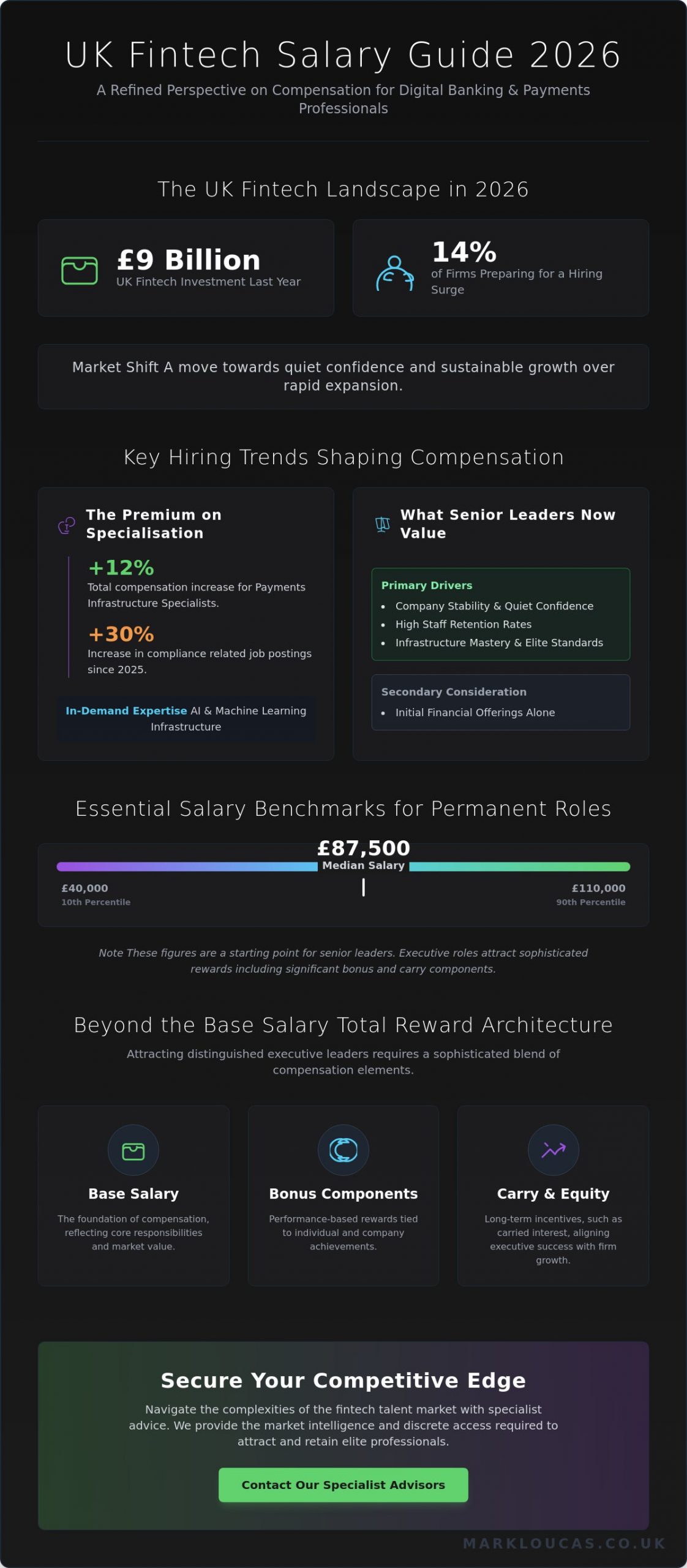
With UK fintech investment reaching £9 billion last year, 14% of the sector’s firms are now preparing for a surge in new vacancies throughout 2026. Finding accurate data for niche payments roles or securing senior leaders amongst such fierce competition is becoming increasingly complex. This fintech salary guide 2026 uk offers a refined perspective on the shifting landscape of compensation. It moves beyond simple averages to provide a curated view of the current market. Accurate data is the foundation of every successful hire.
You likely recognise that attracting high calibre talent requires more than just a competitive base salary, particularly when the most sought after professionals value stability and infrastructure mastery above all else. We promise a sophisticated analysis of compensation trends and strategic benchmarks tailored for digital banking and payments professionals. This guide explores precise salary ranges, market mapping strategies, and the intricate details of executive compensation. It provides the quiet confidence required to manage your interests with expert care. We’ll look at how the shift to skill based hiring is redefining the premium talent market and why specialised technical talent now commands such a significant premium.
Key Takeaways
- Gain access to precise salary ranges for senior engineering and compliance roles to ensure your offers remain competitive within the London market.
- Understand how this fintech salary guide 2026 uk highlights the move towards skill based hiring and the increasing value of AI infrastructure expertise.
- Discover the sophisticated layers of total reward architecture, including carry and bonus components, that attract the most distinguished executive leaders.
- Learn the importance of market mapping and talent intelligence to navigate the rising competition for niche payments and digital banking professionals.
- Explore why senior hires now prioritise company stability and high staff retention rates over initial financial offerings alone.
If you require bespoke advice regarding your firm’s hiring strategy or current market positioning, please feel free to get in touch with our team.
Current Trends in UK Fintech Compensation and Market Dynamics
The UK fintech market in 2026 exhibits an unhurried, mature evolution that contrasts sharply with the frantic pace of previous years. This shift reflects a move towards quiet confidence, where firms prioritise elite standards and sustainable growth over rapid expansion. To attract discerning talent, organisations must carefully organise their compensation structures, ensuring they reflect the rarity of the skills being sought. This is particularly evident in the London fintech centre, where local authority and established reputation are paramount. Understanding the history of financial technology helps illustrate how we have moved from broad innovation to this era of refined, specialised expertise. This fintech salary guide 2026 uk examines how these dynamics influence the current benchmarks for senior leaders. The personality of the market is becoming more intimate, shunning the volume driven nature of large corporate entities in favour of tailored solutions that treat the candidate as the sole focus. This approach suggests a style of recruitment that is never in a rush, reflecting the patience required in high value transactions.
The Rise of Specialised Infrastructure Roles
Niche expertise in payments infrastructure has transitioned from a secondary requirement to a primary hiring priority. High-calibre professionals who grasp the granular details of banking systems are in exceptionally high demand. Recent data indicates a 12% increase in total compensation for payments infrastructure specialists over the last 18 months. Professionals with expertise in AI infrastructure and machine learning deployment are finding themselves at the centre of this trend. Their ability to bridge the gap between legacy systems and modern AI solutions is a rare craftsmanship that commands a significant premium. This focus on infrastructure is also driven by regulatory shifts, which have contributed to a 30% increase in compliance related job postings since 2025. Compensation for these senior specialists reflects their role in safeguarding the firm’s operational integrity whilst navigating a complex legal landscape.
Market Mapping and Strategic Talent Intelligence
Modern hiring decisions are increasingly shaped by data driven intelligence rather than intuition alone. Through payments industry recruitment expertise, firms can leverage market mapping to understand the competitive talent landscape in detail. A discreet boutique advisor provides access to private, non public opportunities that remain invisible to the broader market. This patient and diligent approach ensures that every placement is a precise match for both the candidate’s aspirations and the organisation’s long term vision. By mapping the market, firms can identify top performers who may not be actively seeking a new role but are open to the right strategic move. It’s about finding the perfect fit through meticulous research and an intimate understanding of the sector’s unique geography.
For those seeking a more granular analysis of executive reward structures or private market intelligence, we invite you to connect with our boutique advisors for a tailored consultation.
Essential Salary Benchmarks for Payments and Digital Banking Roles
In 2026, the benchmarks for high calibre fintech talent are defined by a meticulous attention to detail and a profound understanding of core infrastructure. As the UK’s FinTech Sector Strategy continues to foster a mature and stable ecosystem, the demand for specialists who can navigate complex technical and regulatory landscapes has never been higher. This fintech salary guide 2026 uk identifies that median salaries for permanent roles have reached £87,500, whilst the broader range spans from £40,000 at the tenth percentile to £110,000 at the ninetieth. However, for the senior leadership that defines the London market, these figures are merely a starting point for negotiation.
Payments and Infrastructure Leadership Salaries
Leadership in payments architecture now requires an intimate knowledge of RTGS systems and the migration to ISO 20022 standards. For RTGS payment consulting specialists and Infrastructure Directors, base salaries in the London centre frequently exceed £120,000. This reflects the craftsmanship required to manage high stakes architecture that must remain both resilient and agile. These roles are no longer merely technical; they are strategic assets that safeguard the flow of capital in an increasingly interconnected global economy. The 12% increase in total compensation for payments infrastructure specialists over the last 18 months underscores the rarity of this expertise.
Digital Banking and Technology Executive Benchmarks
The landscape for digital banking recruitment has become increasingly nuanced, with a clear distinction between different stages of growth. Technology executives, such as CTOs and Chief Product Officers, are seeing total compensation packages that can exceed £250,000, particularly when they possess expertise in AI infrastructure or trading systems. Whilst emerging scale ups often offer higher equity components to attract visionaries, established digital banks provide a level of stability that many senior leaders now prioritise. Engaging with fintech banking technology recruiters allows firms to benchmark these roles against a backdrop of non public opportunities and elite standards.
Risk and Compliance Compensation Trends
The role of the Chief Compliance Officer has evolved into a cornerstone of the executive team, reflecting the unhurried maturation of the sector. With a 30% increase in compliance related job postings since 2025, base salaries for these experts have risen significantly to match the regulatory complexity they manage. Understanding the strategic requirements of these roles is essential for any firm looking to secure elite talent. For more insights on assessing these professionals, you may find our guide on interviewing compliance expert candidates useful. If you are looking to refine your search for executive leadership, we recommend you speak with our specialist team to discuss your specific requirements.
To discuss how your organisation can structure a reward package that mirrors the calibre of your target hires, please reach out to our specialist advisors for a private consultation.
Beyond the Base Salary and the Total Reward Architecture
The architecture of executive compensation in 2026 has moved far beyond the traditional base salary model. In a competitive talent market, firms must offer more than just financial security. They must provide a vision of shared success and meticulous care. This fintech salary guide 2026 uk identifies that for senior leaders, the total reward package acts as a signal of a firm’s maturity and its commitment to elite standards. These sophisticated layers are designed to reassure a discerning clientele that their professional interests are being managed with expert precision. Negotiations for such high value packages often move at an unhurried pace. This reflects the patience and diligence required to align a candidate’s long term aspirations with the company’s strategic goals. It’s about building a relationship that feels both elite and approachable whilst maintaining a focus on rarity and quality.
Equity and Performance Based Incentives
For high-calibre professionals in revenue driving or infrastructure leadership roles, share options and carried interest remain the primary anchors of a reward strategy. These mechanisms ensure that a leader’s personal success is intimately tied to the long term growth of the business. Performance bonuses are increasingly structured around granular technical milestones or strategic ROI rather than simple volume based targets. This approach organises the incentive structure to reward craftsmanship and deep technical expertise. It’s a method that values the quality of a professional’s contribution over mere duration of service. In many cases, these equity structures are bespoke, reflecting the unique geography of the firm’s market position and the specific value of the individual’s expertise.
Flexible Working and Lifestyle Benefits
A noticeable shift in behaviour amongst senior hires in 2026 is the elevated importance of lifestyle benefits that reflect a brand identity of curated excellence. Favourite perks now include comprehensive private healthcare and bespoke wellness allowances that suggest the individual is the sole focus of the organisation’s attention. Hybrid working has evolved from a temporary arrangement into a permanent, structured reality that prioritises productivity and personal wellbeing. Such benefits are no longer seen as extras; they are essential components of a refined service that values the person behind the professional. By offering these tailored solutions, firms establish themselves as knowledgeable insiders who understand the nuances of high end professional living and the importance of a stable, positive work environment.
If you are ready to secure your next leadership hire with the discretion and precision your organisation deserves, we invite you to discuss your executive search requirements with us today.
Strategic Hiring and Negotiation in a Competitive Talent Market
Securing elite talent in the current climate requires a patient and diligent approach that larger, volume driven firms often overlook. When consulting this fintech salary guide 2026 uk, it’s clear that the final figure is only part of a much larger narrative of mutual trust and strategic alignment. Managing the interests of senior professionals requires expert care, ensuring that every touchpoint reflects the exclusivity and prestige of the opportunity. This is where niche expertise in payments industry recruitment becomes invaluable, as it allows for a nuanced understanding of the candidate’s journey and their specific technical craftsmanship. Reliability acts as a psychological anchor during the negotiation phase. It reassures the individual that their career trajectory is in safe, professional hands. This unhurried pace suggests a brand that is never in a rush, reflecting the patience required in high value transactions.
The Cost of a Bad Hire in Fintech
Volume driven recruitment models frequently fail to account for the intricate cultural fit required in senior leadership roles. A failed appointment at this level carries a heavy financial and strategic burden, often disrupting long term projects and damaging team morale. It’s a risk that most discerning firms cannot afford to take. By engaging a knowledgeable local insider to vet candidates, you gain access to a layer of scrutiny that goes beyond the CV. This meticulous vetting process ensures that only those who truly embody the firm’s values and technical standards are presented. It’s about quality, not quantity. We prioritise privacy and tailored solutions above all else, ensuring a perfect match that stands the test of time.
Negotiation Strategies for Senior Professionals
The art of negotiation in 2026 shuns aggressive, high pressure tactics in favour of a tone of curated excellence. Communicating value should feel like a natural extension of the brand’s vision, highlighting how the candidate’s unique skills will shape the future of the organisation. During salary talks, providing a framework for addressing weaknesses for interview can actually build trust, as it demonstrates a commitment to professional growth and transparency. A compelling vision is the most persuasive tool in your arsenal. It transforms a simple job offer into a rare opportunity for distinction. This approach suggests a brand that values the individual as the sole focus of their attention. For a bespoke approach to your next senior appointment, please speak with our executive search team.
To ensure your talent strategy reflects the elite standards of the London market, we invite you to connect with our boutique consultancy for an unhurried discussion regarding your future requirements.
Specialist Talent Advisory and the Future of Fintech Resourcing
Strategic resourcing has emerged as the definitive cornerstone of business growth in 2026, transcending the simple act of filling vacancies to become a sophisticated exercise in market positioning. As this fintech salary guide 2026 uk has demonstrated, the competition for high calibre professionals is intense, requiring a level of meticulous attention to detail that only a dedicated partner can provide. Mark Loucas operates as a highly connected boutique advisor, offering a refined service that shuns the impersonal nature of volume driven recruitment. Our vision is rooted in the belief that every hire should be a masterpiece of alignment, where the granular details of a candidate’s expertise perfectly match the architectural needs of a forward thinking firm. By providing tailored solutions to complex resource challenges, we reassure our clientele that their most vital interests are being managed with expert care and quiet confidence.
The Value of a Specialist Recruitment Partner
The distinction between a generalist agency and a specialist partner lies in the depth of their local authority and the exclusivity of their network. Whilst large corporate entities often rely on public databases, our approach prioritises access to private and non public talent pools that remain hidden to the uninitiated. This intimate method ensures that we identify individuals whose technical craftsmanship and leadership behaviour are of the highest rarity. For a deeper understanding of how we navigate this landscape, you may wish to explore our analysis of fintech recruitment agencies in London. We treat each client as the sole focus of our attention, delivering a personalised approach that suggests a brand never in a rush, reflecting the patience required in high value transactions.
Looking Ahead to 2027 and Beyond
As we look towards 2027, the evolution of the payments sector will continue to be defined by infrastructure mastery and the seamless integration of AI. The ongoing importance of specialised financial recruitment cannot be overstated, as the demand for professionals who can navigate both technical complexity and regulatory shifts remains unwavering. We predict that the most successful firms will be those that embrace a diligent, data driven approach to talent resourcing whilst maintaining a focus on stability and company culture. We invite you to partner with a firm that values privacy and tailored excellence above all else. Together, we can ensure your organisation remains at the forefront of the UK’s elite fintech ecosystem.
If you require a more granular analysis of the executive landscape or wish to discuss a specific senior appointment, please connect with our boutique consultancy.
Securing Your Competitive Advantage in the 2026 Talent Market
The evolution of the UK fintech landscape in 2026 demands a shift from volume driven hiring to a model of curated excellence. As we’ve explored in this fintech salary guide 2026 uk, the most distinguished leaders now prioritise stability and technical craftsmanship over simple financial gain. Mastery of payments infrastructure and the strategic alignment of total reward packages are no longer optional; they’re the hallmarks of firms that lead the London centre. Since 2011, we’ve exclusively focused on the global fintech and digital banking sectors, providing the quiet confidence required to manage high stakes appointments. Whether you require expertise in RTGS consulting or seek a discreet boutique advisor for non public executive opportunities, our approach remains patient and diligent. We invite you to contact our specialist advisors for a bespoke talent strategy that reflects your firm’s unique prestige. The future of your organisation depends on the quality of the individuals you choose to lead it. We look forward to ensuring your interests are managed with the expert care they deserve.
Frequently Asked Questions
What is the average salary for a Fintech CTO in London for 2026?
The average base salary for a Fintech CTO in London for 2026 frequently exceeds £120,000, whilst total compensation packages often reach beyond £250,000. These figures reflect the craftsmanship required to manage complex technical architectures, especially for those with expertise in AI infrastructure or trading systems. Such senior roles command a significant premium due to the rarity of the skills and the strategic impact of their leadership on business growth.
How much do ISO 20022 migration specialists earn in the UK?
Specialists managing ISO 20022 migrations and RTGS systems in the UK typically earn base salaries exceeding £120,000 within the London centre. This reflects the 12% increase in total compensation for payments infrastructure specialists observed over the last 18 months. These professionals are essential for safeguarding operational integrity, and their remuneration reflects the meticulous attention to detail required for such high stakes infrastructure projects in a mature financial ecosystem.
Are fintech salaries in the UK increasing or decreasing in 2026?
Fintech salaries in the UK are experiencing a steady increase in 2026, with a year on year median growth rate of 6.06%. According to this fintech salary guide 2026 uk, the median annual salary for permanent roles now stands at £87,500. This unhurried maturation of the market suggests that whilst the frantic pace of previous years has slowed, the value placed on elite, specialised talent remains exceptionally high amongst discerning firms.
What perks are most popular amongst senior fintech executives?
Senior fintech executives increasingly prioritise lifestyle benefits such as comprehensive private healthcare, wellness allowances, and structured hybrid working arrangements. Equity components, including share options and carried interest, remain the most popular long term incentives for those in leadership positions. These perks reflect a brand identity of curated excellence and suggest that the individual’s wellbeing and long term success are the organisation’s primary focus, moving beyond simple financial offerings.
How does working for a digital bank compare to traditional banking salaries?
Digital banking salaries are highly competitive, often offering more flexible total reward architectures compared to traditional banking institutions. Top performers in digital banks have seen annual salary growth of 15%, whilst senior professionals often benefit from significant equity potential that traditional banks may not provide. Whilst established banks may offer higher base salaries in some instances, digital banks provide a level of agility and innovation that attracts high calibre talent seeking long term security.
What is the typical bonus structure for senior payments roles?
The typical bonus structure for senior payments roles is increasingly tied to strategic technical milestones and proven return on investment. Total compensation for these high calibre professionals can exceed £250,000 when bonuses and carry components are meticulously structured. This approach ensures that performance incentives are aligned with long term business growth and the craftsmanship required to manage sophisticated payments architecture, reflecting the patience and diligence required in high value transactions.
Does Mark Loucas provide salary benchmarking for interim fintech roles?
Yes, Mark Loucas provides comprehensive salary benchmarking as part of our Fintech Providers Contract and Interim Solutions. We deliver tailored intelligence that reflects the unhurried evolution of the market, ensuring that interim placements are remunerated according to elite standards. Our expertise as a discreet boutique advisor allows us to provide precise data that helps firms manage their interests with expert care and quiet confidence during complex transition periods.
How can I access market mapping services for my fintech organisation?
You can access our Market Mapping and Intelligence services by reaching out to our highly connected boutique advisory team for a private consultation. We provide a patient and diligent analysis of the competitive talent landscape, identifying non public opportunities and elite performers who may not be actively seeking a new role. This tailored solution allows your organisation to navigate the market with the local authority and expertise required for sustainable business growth.

Article by
Liam Henfrey
Liam Henfrey is a seasoned specialist in the payments and banking sectors with over two decades of experience. As the Founder and CEO of FINOPSIS and Managing Director at Mark Loucas Ltd, he advises organisations on complex financial operations and technology. His career includes senior roles at PwC, Deloitte, and Visa Europe.
Related Fintech Recruitment Guides
If you liked this guide then you may also like the following: